I keep getting anonymous spam messages camouflaged as comments, since all comments have be approved by me you would never see those. this started happening after I approved one anonymous comment that was complimenting one of my posts.
So just for the record, I will not anymore now, or in the future approve any anonymous comments, anything anonymous will be reported as spam. Go sell your tobacco products, genital warts remedies.... whatever.....somewhere else! you really think I would click on any of your links? Go Away
If you have to really say something relevant to a post, it shouldn't be a issue to show your identity....otherwise go leave your comments somewhere else!
Monday, February 25, 2013


Thursday, November 1, 2012
New Adventures
I have been busy with so many other things I haven’t had
time or felt like writing on this blog of mine. I am amazed by all these
bloggers that manage to write on their blogs daily and do all the things they
are writing about……where do they find the time? Do they get to sleep? Get to
spent time on the sofa with their spouse, kids/……I don’t think I could keep up
with that, nor do I want to.
I have too many things I like to do during the day and when I am done for the day, I just have no energy left for writing. I also think my evening is time to spent with my husband, family and friends not with the online community. So my blog, even I sometime think I should share more, it still will always be secondary to the life I am living, because living and enjoying life is more important as this blog.
I have too many things I like to do during the day and when I am done for the day, I just have no energy left for writing. I also think my evening is time to spent with my husband, family and friends not with the online community. So my blog, even I sometime think I should share more, it still will always be secondary to the life I am living, because living and enjoying life is more important as this blog.
I will try to share with you, but I won't try that hard. I'll keep finding more things to keep busy
with and things I want to learn, try, do.......the list is getting longer. I've
been always a hands on person, creative, crafty and resourceful. Why buy
something you can make yourself? I like to tinker and make things, I like to
grow things, make my own food, cakes, jams, pickles.....I enjoy eating good
food, and if I can make it myself.....so much better.
So I just went on another journey.....the journey of cheese making. Last year I met this women outside of town, I call her "goat lady" who has goats, milking goats, cheese milk type of goats and she is getting me goat-milk. So I started making farm type fresh goat cheeses, chevre types or hand cheeses. Then I found a young farmer that sells Raw milk herd shares. So I signed up with him. And since 2 weeks ago there is only one kid left in the house, I have more milk, then we use for fresh use.......so I have been busy making cheese and learning about cheese making.......been hanging around the internet cheese sites all week.
So I just went on another journey.....the journey of cheese making. Last year I met this women outside of town, I call her "goat lady" who has goats, milking goats, cheese milk type of goats and she is getting me goat-milk. So I started making farm type fresh goat cheeses, chevre types or hand cheeses. Then I found a young farmer that sells Raw milk herd shares. So I signed up with him. And since 2 weeks ago there is only one kid left in the house, I have more milk, then we use for fresh use.......so I have been busy making cheese and learning about cheese making.......been hanging around the internet cheese sites all week.


Wednesday, July 11, 2012
Wednesday, March 21, 2012
GMOs -- We Have a Right to Know! Label-It Petition
New Infographic! GMOs -- We Have a Right to Know!
 Less than 1 week to go to demand that the FDA label GMOs--3,500 more signatures needed and we will have over 1 million! Please repost! And please if you haven't signed it yet........sign and then repost

Monday, March 19, 2012
Saving - Keeping your seeds
As some of you know I'm a Heirloom seed gardener. I don't plant hybrid seeds but only open-pollinated seeds, seeds that come true to type and can be saved. Over the years I have been saving more and more seeds of my plants. At first it was just the easy ones like lettuce and tomatoes, peppers anything that won't cross pollinate as bad and didn't need any special pollination care like isolation boxes or are a lot of work to process since I really didn't have any real seed screens instead using my kitchen sieves.
Now I save so many seeds every year, of so many varieties I really need to keep good track of what seed is in which seed bag.....I was getting to many little plastic baggies with 'unknown' variety or '???' written on them, because either the writing with the permanent marker had rubbed off or I forgot to label them right away, thinking I would remember which variety it was and then didn't.
So last year I sat down with my Print-Shop software and designed a seed pack that would fit into a 3" x 5" plastic bag.

I added the name of the plant variety and very basic grow info on the design and added a picture of the vegetable plant. They were some nice seed packs but it took too much time to cut and glue them together every time I needed some. It ended up being a way bigger job then I wanted it to be.
I ended up just using the front side, cutting away the rest, since I was storing the seed envelopes in plastic bags anyway, I really didn't need all the paper. So this spring I decided to redesign the whole thing and came up with paper card inserts that perfectly fit into the plastic baggies and since a bit larger also were able to hold much more growing info.

I can also add many more inserts on one sheet of paper.......saving paper and trees. Also just having all the important growing info right in front of me when I need it, is just so nice, plus instead of cutting paper and gluing I get to have more fun planting and playing in my garden.
Now I save so many seeds every year, of so many varieties I really need to keep good track of what seed is in which seed bag.....I was getting to many little plastic baggies with 'unknown' variety or '???' written on them, because either the writing with the permanent marker had rubbed off or I forgot to label them right away, thinking I would remember which variety it was and then didn't.
So last year I sat down with my Print-Shop software and designed a seed pack that would fit into a 3" x 5" plastic bag.
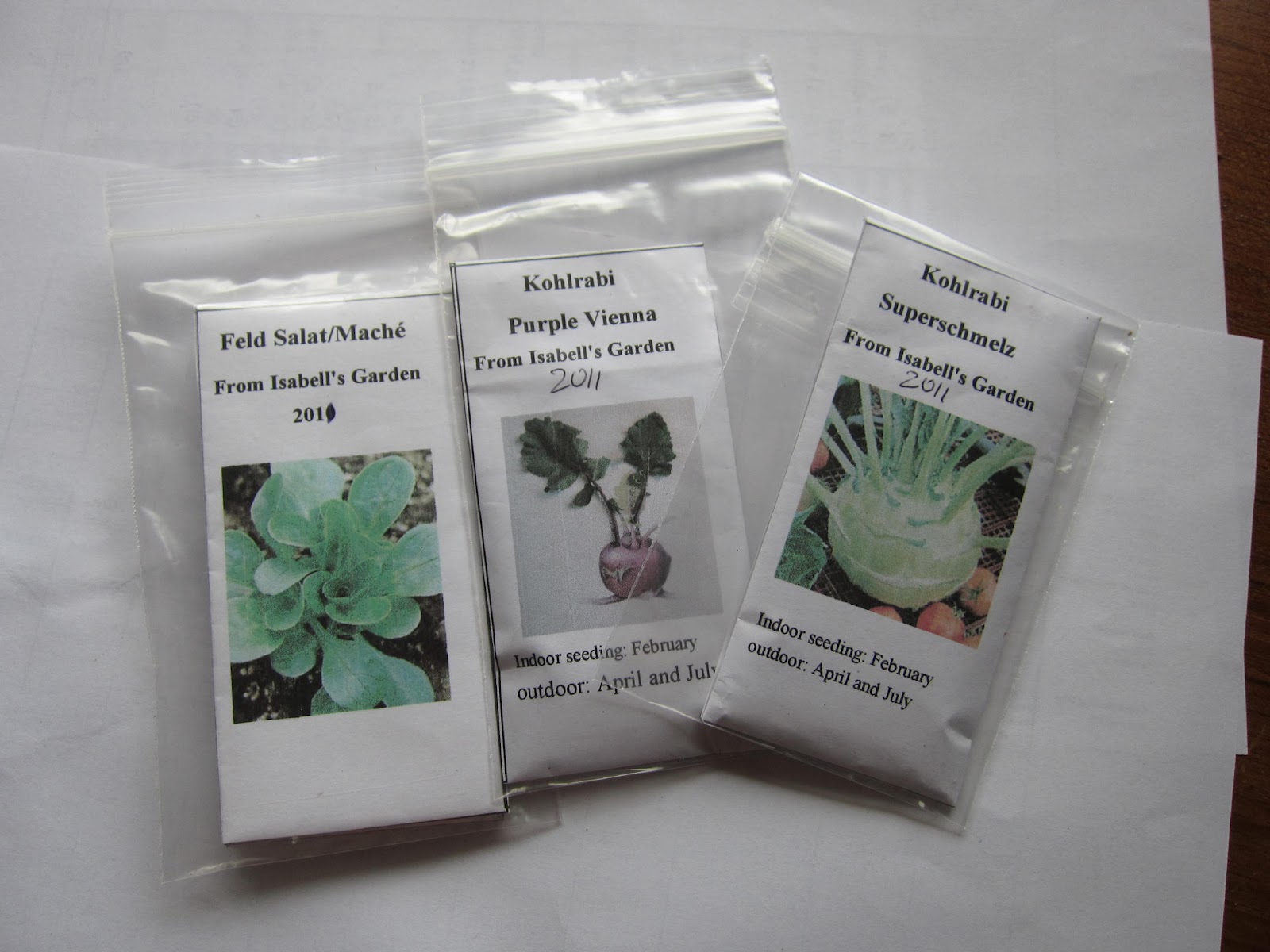
I added the name of the plant variety and very basic grow info on the design and added a picture of the vegetable plant. They were some nice seed packs but it took too much time to cut and glue them together every time I needed some. It ended up being a way bigger job then I wanted it to be.
I ended up just using the front side, cutting away the rest, since I was storing the seed envelopes in plastic bags anyway, I really didn't need all the paper. So this spring I decided to redesign the whole thing and came up with paper card inserts that perfectly fit into the plastic baggies and since a bit larger also were able to hold much more growing info.
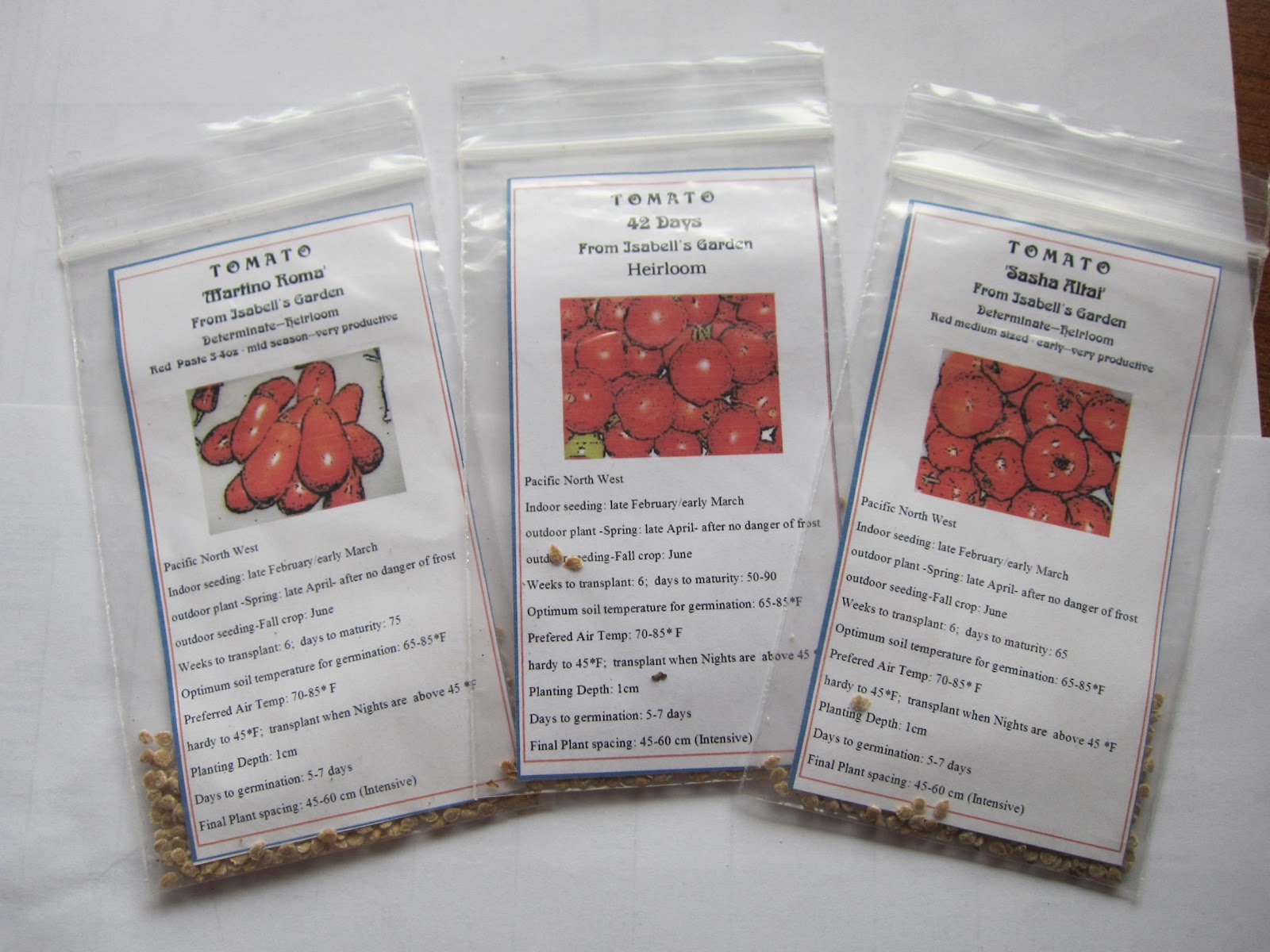
I can also add many more inserts on one sheet of paper.......saving paper and trees. Also just having all the important growing info right in front of me when I need it, is just so nice, plus instead of cutting paper and gluing I get to have more fun planting and playing in my garden.
Friday, January 20, 2012
Exploring gardening philosophies
Over the last year I have done a lot of exploring.
I just felt my garden could do better, I could do better in and for my garden.
Over the years I have experimented with a lot of ideas from books, magazines and info I find on-line, don't get me wrong they aren't all bad but after you read them all you constantly find that everyone thinks theirs is the best possible way to grow the greatest amount of vegetables possible or they contradict each other or you try it out and have the worst vegetable harvest ever, like I did last year.
Everyone nowadays seems to be an expert. Every garden show I go to have plenty of those experts some know what they are doing, but some don't, even they think they do.
I know a lot of things about gardening but I don't think I'll ever would think I am an expert to tell people how to garden.....nope I am not garden show ready.
So first here is my disclaimer: whatever I write here on my blog are my experiences and trials in gardening, and I don't take any responsibility of you are copying what I am doing and now your crops failed, your vegetable garden is a mess, whatever.......I don't know it all!
so that's being said, I have decided I am staying with the experts, I am going to learn and study organic growing philosophies that have been done for a long time, with lot's of trials and research that show it works.
Sorry weatherman, that lost his job and likes to garden and now gives lectures about his gardening experiment......your method just didn't work out for me. You don't know what you're talking about and I finally figured out why all my seedlings died on me last year, why my seeds did not want to sprout and my harvest was meager. It was the leaves I put in spring on my beds, the ones I got from the city leaf pile and were full of Oak leaves and Walnut tree leaves and you said it would be alright to put them on even that late in the season, short time before planting. Comes out these leaves have growth inhibitors that prohibits seeds from sprouting and hinders the growth of young seedlings, and those leaves need to be first broken down, composted, to use them in your vegetable-garden.
 This I first learned from an old book from Rodale Press named "High-Yield-Gardening" that is out of print but still can be searched for and found used on the Internet.
I don't know about you but I trust the books Rodale Press releases, since Rodale Institute has a large organic gardening research facility that documents what works and doesn't work and they have been doing it for a long time. I also found many found references in the other books I have been reading, "to only use composted leaves or if you put them on your vegetable-beds let them compost down on the beds for at least half a year or more until they turn into leaf mold" none said to put leaves directly on your beds a short time before planting.
 I learned about the 'leave' issue in old Biodynamic gardening books,
 the method Rudolf Steiner
promoted after he found the food quality diminishing after long years of industrial farming and tried to get farmers back to natural ways of agriculture in harmony with nature,
 including in harmony with the moon, the planets and the stars .
 I read about composting leaves first in the Bio Intensive books from John Jeavons
 one of the founders of the Ecology Action Organization and Research facility in California. Biointensive is practically a combination of the French-Intensive Gardening technique from the 1800 and the Rudolf Steiner Biodynamic Method.
 And I read about this in the Perma-Culture book "Gaia's Garden",
at least in concern for vegetable garden areas.
Perma-Culture which has the concept of using your garden and the whole property as an eco system, incorporating sustainable designs, natural areas, including backyard farm animals and food forests wants you to never have to bring anything from the outside in to feed and nourish your garden, it all is supposed to be sustained by what you grow and compost from your property and so you design your whole property accordingly......just think Permanent Culture.
Again Permaculture borrows much of its core philosophy from another method, which is Rudolf Steiners Biodynamic gardening even it lacks the mystical elements.
All of these methods tell you to compost your leaves before growing your vegetables in them, so that's what I am going to do.
At first when I started reading these books I thought it was all a bit too complicated but as I started to read all the books simultaneously I realized that all these methods really have all the same philosophy and follow the same principles. "Garden with Nature!" and "Garden sustainable!"and "Use the land to grow your food so you get most out of it with the least amount of land used!"
So I will take the principles that fit my need (sorry John Jeavon.....I don't think I'll do the double digging) and once I figure it all out, including that "Planting by the Moon" I think I'll be set.
Learning from the experts will make my garden grow better!
I just felt my garden could do better, I could do better in and for my garden.
Over the years I have experimented with a lot of ideas from books, magazines and info I find on-line, don't get me wrong they aren't all bad but after you read them all you constantly find that everyone thinks theirs is the best possible way to grow the greatest amount of vegetables possible or they contradict each other or you try it out and have the worst vegetable harvest ever, like I did last year.
Everyone nowadays seems to be an expert. Every garden show I go to have plenty of those experts some know what they are doing, but some don't, even they think they do.
I know a lot of things about gardening but I don't think I'll ever would think I am an expert to tell people how to garden.....nope I am not garden show ready.
So first here is my disclaimer: whatever I write here on my blog are my experiences and trials in gardening, and I don't take any responsibility of you are copying what I am doing and now your crops failed, your vegetable garden is a mess, whatever.......I don't know it all!
so that's being said, I have decided I am staying with the experts, I am going to learn and study organic growing philosophies that have been done for a long time, with lot's of trials and research that show it works.
Sorry weatherman, that lost his job and likes to garden and now gives lectures about his gardening experiment......your method just didn't work out for me. You don't know what you're talking about and I finally figured out why all my seedlings died on me last year, why my seeds did not want to sprout and my harvest was meager. It was the leaves I put in spring on my beds, the ones I got from the city leaf pile and were full of Oak leaves and Walnut tree leaves and you said it would be alright to put them on even that late in the season, short time before planting. Comes out these leaves have growth inhibitors that prohibits seeds from sprouting and hinders the growth of young seedlings, and those leaves need to be first broken down, composted, to use them in your vegetable-garden.

I don't know about you but I trust the books Rodale Press releases, since Rodale Institute has a large organic gardening research facility that documents what works and doesn't work and they have been doing it for a long time. I also found many found references in the other books I have been reading, "to only use composted leaves or if you put them on your vegetable-beds let them compost down on the beds for at least half a year or more until they turn into leaf mold" none said to put leaves directly on your beds a short time before planting.


promoted after he found the food quality diminishing after long years of industrial farming and tried to get farmers back to natural ways of agriculture in harmony with nature,


at least in concern for vegetable garden areas.
Perma-Culture which has the concept of using your garden and the whole property as an eco system, incorporating sustainable designs, natural areas, including backyard farm animals and food forests wants you to never have to bring anything from the outside in to feed and nourish your garden, it all is supposed to be sustained by what you grow and compost from your property and so you design your whole property accordingly......just think Permanent Culture.
Again Permaculture borrows much of its core philosophy from another method, which is Rudolf Steiners Biodynamic gardening even it lacks the mystical elements.
All of these methods tell you to compost your leaves before growing your vegetables in them, so that's what I am going to do.
At first when I started reading these books I thought it was all a bit too complicated but as I started to read all the books simultaneously I realized that all these methods really have all the same philosophy and follow the same principles. "Garden with Nature!" and "Garden sustainable!"and "Use the land to grow your food so you get most out of it with the least amount of land used!"
So I will take the principles that fit my need (sorry John Jeavon.....I don't think I'll do the double digging) and once I figure it all out, including that "Planting by the Moon" I think I'll be set.
Learning from the experts will make my garden grow better!
Wednesday, January 18, 2012
In Protest to SOPA
██ ████████ ██████ ██████████ ██ ████ ██ ████ ██████████ ██. ███ ███ This post has been found in violation of H.R. 3261, S.O.P.A and has been removed.
Wednesday, December 7, 2011
Friday, July 15, 2011
Wasting food = wasting resorces!
Dive! The Film - Trailer
Every year in America 96 billion pounds of food is thrown away and wasted. 263 million pounds every day. This amounts to 11 million pounds of food every hour of the day. It is not just an American problem, half of all the food in the world is wasted. But like in many waste issues the US tops everyone.
That is insane, especially if you look at the plight of all the hungry men, women and children in this country and around the world. We could feed all the hungry in this world with the food we waste.
And frankly it is unsustainable because we are just not wasting food, we are wasting precious natural resources, poisoning our environment to grow this food we choose then to throw away.
This definitely is something we could change. We could change this in our lifetime.
We can get the word out that we don't agree with this waste, we can send a message to the grocery stores and tell them that we care about the environment, food waste, and hungry people--and they should too!
Go watch this movie, it will be available July 19 on Netflix
Every year in America 96 billion pounds of food is thrown away and wasted. 263 million pounds every day. This amounts to 11 million pounds of food every hour of the day. It is not just an American problem, half of all the food in the world is wasted. But like in many waste issues the US tops everyone.
That is insane, especially if you look at the plight of all the hungry men, women and children in this country and around the world. We could feed all the hungry in this world with the food we waste.
And frankly it is unsustainable because we are just not wasting food, we are wasting precious natural resources, poisoning our environment to grow this food we choose then to throw away.
This definitely is something we could change. We could change this in our lifetime.
We can get the word out that we don't agree with this waste, we can send a message to the grocery stores and tell them that we care about the environment, food waste, and hungry people--and they should too!
Go watch this movie, it will be available July 19 on Netflix
Thursday, July 14, 2011
Pardon me! I am gardening
Some probably are wondering, where is this gartenfrau? What is she doing, why no posts for such a long time?
Is she ever going to come back to share with us?
Well the answer is.....yes I will be back, just very limited until the main season is over. It is just that we are having some major projects at our place this year, and if you include making the new garden area, taking care of the existing garden, vegetable garden, taking care of the harvest and .........I just can't find much time for blogging right now.
Also, what kind of gardener would I be, if the blogging would take preference before the gardening.
My priority after all is working my garden, and blogging will never take me away from my garden.
Blogging can wait, but my garden won't.
So pardon me, while I am gardening
here are pictures from my new garden area started last year and how it looks today
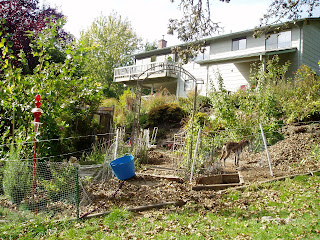 This picture was taken September 2010, when I just got started on the sitting area
 This is how it looks today. Isn't it amazing how fast everything grows in a year?
Happy gardening, everyone!
Is she ever going to come back to share with us?
Well the answer is.....yes I will be back, just very limited until the main season is over. It is just that we are having some major projects at our place this year, and if you include making the new garden area, taking care of the existing garden, vegetable garden, taking care of the harvest and .........I just can't find much time for blogging right now.
Also, what kind of gardener would I be, if the blogging would take preference before the gardening.
My priority after all is working my garden, and blogging will never take me away from my garden.
Blogging can wait, but my garden won't.
So pardon me, while I am gardening
here are pictures from my new garden area started last year and how it looks today


Happy gardening, everyone!
Tuesday, May 17, 2011

Monday, April 25, 2011
Economics of Happiness - A Plaidoyer for a better, simpler life
I grew up with just a few changes of clothes, you know what, I never felt I was missing more clothes. It is not just that we buy and owe money to get more stuff, but to do that we use up a lot of natural resources and we produce a lot of trash. People generally don't buy most of the stuff because they need it, they buy it because they want it. Many would be financially much better off then spending their money on stuff they could do without.
The fact is an economy that is dependent on the population to buy more and more is an unsustainable economy and it will one day crash. As I see it, we are already on a fast decline.
We all need a simpler life, with time to enjoy the pleasures of being!
I am eagerly waiting for this documentary to be screened around where I live. It sounds like a great film
Tuesday, April 12, 2011
Vegetable gardening with nature-Biodynamic gardening
I have been a bit lazy to write on my blog lately......or actually I have been keeping busy with other things in life. Sometimes I don't know where to find all the time to do all the things I am doing or want to do.
Occasionally the sun has come out and it was dry enough to do some work in the garden. One really has to take advantage of each dry day that comes in spring in the North West.
Since my vegetable garden has not produced as much as I thought it should, I have been doing a lot of reading and researching online how to improve my garden. You might remember the draining issue I am having, water just runs out of my bed into the pathways, watering the weeds and letting my vegetables starve of water and this even I use drip irrigation. It not just makes growing the vegetables very difficult but it's a big waste of a natural resource we don't have enough in this world, that is Water.
I really think the problem is the city growing compost I have been getting. Since we are in the Pacific Northwest we have an abundance of wood waste, the garden soil mix is predominantly made with wood-waste, you can also feel it, when it is new you get tiny, hairline splinters into your skin. I also think it does not hold any water because it is missing good humus and loam. I think this garden-compost is very imbalanced. It shows that you can't just use any crap out there, just because it is there in abundance and make good compost.
So I got a load of good garden loam and I mixed into some of my empty beds a few inches of loam, covered this with 2 inches of my home-made compost, then spread some seed meal all over it and covered it with leaf mulch I can pick up for free at the community gardens.
I hope it will give me a little bit of a better growing season, this year. But I know now I have lot's to do to balance my soil and get it healthy again.
While the weather has been keeping me inside I have been reading a few books about vegetable gardening, trying to learn new tricks to improve my harvest and gardening or actually I am still reading most of them. I got so many I am reading them all at the same time. Most of the books have to do with Intensive gardening , and Companion planting
 , which are based on the Gardening philosophy of Bio-Dynamic gardening, so I had to get a book about that also. A few have to do with Perma-culture
 which after reading about the Bio-Dynamic method, I think really is a method build onto the Bio-Dynamic method.
Bio-dynamic gardening is often attributed to the French in the USA but it really was started by Rudolf Steiner who was also the founder of the Waldorf Schools and was Austrian.
I found this older book that gives a nice introduction to the method
This gardening philosophy practically is gardening with nature, using a holistic approach. The goal is to make your garden a self-contained, self-sustaining ecosystem. Using what nature offers you, building a community of plants, soil, fungus, wild and domestic animals, climate and water. Where all the elements come together and thrive, because they support each other. It is gardening with nature instead against it. This gardening philosophy understands that everything in the garden-environment is interrelated, that the dynamics, or life forces in nature have to be included in our gardens if we want to heal and sustain the earth, so the earth can feed us into the future.
So you work with nature, plant at specific times following natures planting calendar , what they call Phenomenology - the science of the relations between climatic and periodic biological phenomena, such as migration and birthing of birds and the fruiting of plants.
You put fertility back into the soil, restoring the micro-life and conditions that encourage the invisible micro-life in it, to balance the interaction of substance and energy in the soil and growing plants. A balanced soil, will grow your vegetables, and will transmit substance (nutrition) and energy as food for us and our animals. The animals will give us manure, the plants compost, which if properly composted will feed again the soil that feed us. Proper crop rotations, cover crops and green manuring will also support the soil health that is another important factor in Bio-dynamic gardening.
Working with nature also means recognizing how important the entire environment of the garden is for a good growing environment , so you restore the most beneficial environmental conditions for your garden for example forest, wind protection, water regulation and realizing that the soil has not just a chemical-mineral organic system, but also a physical structure. The goal is a crumbly, friable, deep, well-aerated structure if you want to have fertile soil so the bio-dynamic method is very specific about the proper cultivation of the soil to avoid structural damage.
This vineyard is growing their wine grapes in the Bio-dynamic way and he made 10 videos explaining the
Top Ten Elements of Biodynamics that explain the method very nicely.
you can watch them all on You Tube
Doesn't this sound like a neat way to garden? Everything is so interconnected out there, I really wonder now how anyone could ever even think growing food any other way........anyway reading all these great books made me really understand how bad the soil I got from my local composting facility is and how imbalanced it made my soil in my garden.
So this is where I am going to have to focus on, on my soil!
Occasionally the sun has come out and it was dry enough to do some work in the garden. One really has to take advantage of each dry day that comes in spring in the North West.
Since my vegetable garden has not produced as much as I thought it should, I have been doing a lot of reading and researching online how to improve my garden. You might remember the draining issue I am having, water just runs out of my bed into the pathways, watering the weeds and letting my vegetables starve of water and this even I use drip irrigation. It not just makes growing the vegetables very difficult but it's a big waste of a natural resource we don't have enough in this world, that is Water.
I really think the problem is the city growing compost I have been getting. Since we are in the Pacific Northwest we have an abundance of wood waste, the garden soil mix is predominantly made with wood-waste, you can also feel it, when it is new you get tiny, hairline splinters into your skin. I also think it does not hold any water because it is missing good humus and loam. I think this garden-compost is very imbalanced. It shows that you can't just use any crap out there, just because it is there in abundance and make good compost.
So I got a load of good garden loam and I mixed into some of my empty beds a few inches of loam, covered this with 2 inches of my home-made compost, then spread some seed meal all over it and covered it with leaf mulch I can pick up for free at the community gardens.
I hope it will give me a little bit of a better growing season, this year. But I know now I have lot's to do to balance my soil and get it healthy again.
While the weather has been keeping me inside I have been reading a few books about vegetable gardening, trying to learn new tricks to improve my harvest and gardening or actually I am still reading most of them. I got so many I am reading them all at the same time. Most of the books have to do with Intensive gardening
, and Companion planting, which are based on the Gardening philosophy of Bio-Dynamic gardening, so I had to get a book about that also. A few have to do with Perma-culture which after reading about the Bio-Dynamic method, I think really is a method build onto the Bio-Dynamic method.Bio-dynamic gardening is often attributed to the French in the USA but it really was started by Rudolf Steiner who was also the founder of the Waldorf Schools and was Austrian.
I found this older book that gives a nice introduction to the method
This gardening philosophy practically is gardening with nature, using a holistic approach. The goal is to make your garden a self-contained, self-sustaining ecosystem. Using what nature offers you, building a community of plants, soil, fungus, wild and domestic animals, climate and water. Where all the elements come together and thrive, because they support each other. It is gardening with nature instead against it. This gardening philosophy understands that everything in the garden-environment is interrelated, that the dynamics, or life forces in nature have to be included in our gardens if we want to heal and sustain the earth, so the earth can feed us into the future.
So you work with nature, plant at specific times following natures planting calendar
, what they call Phenomenology - the science of the relations between climatic and periodic biological phenomena, such as migration and birthing of birds and the fruiting of plants. You put fertility back into the soil, restoring the micro-life and conditions that encourage the invisible micro-life in it, to balance the interaction of substance and energy in the soil and growing plants. A balanced soil, will grow your vegetables, and will transmit substance (nutrition) and energy as food for us and our animals. The animals will give us manure, the plants compost, which if properly composted will feed again the soil that feed us. Proper crop rotations, cover crops and green manuring will also support the soil health that is another important factor in Bio-dynamic gardening.
Working with nature also means recognizing how important the entire environment of the garden is for a good growing environment , so you restore the most beneficial environmental conditions for your garden for example forest, wind protection, water regulation and realizing that the soil has not just a chemical-mineral organic system, but also a physical structure. The goal is a crumbly, friable, deep, well-aerated structure if you want to have fertile soil so the bio-dynamic method is very specific about the proper cultivation of the soil to avoid structural damage.
This vineyard is growing their wine grapes in the Bio-dynamic way and he made 10 videos explaining the
Top Ten Elements of Biodynamics that explain the method very nicely.
you can watch them all on You Tube
Doesn't this sound like a neat way to garden? Everything is so interconnected out there, I really wonder now how anyone could ever even think growing food any other way........anyway reading all these great books made me really understand how bad the soil I got from my local composting facility is and how imbalanced it made my soil in my garden.
So this is where I am going to have to focus on, on my soil!
Wednesday, March 23, 2011
Rally for the Right to know
Rally for the Right to Know | The Non-GMO Project

There will be a "Rally for the Right to Know", if GMO's are used in the food your eating. The "Millions Against Monsanto" rally is a nation-wide event scheduled for Saturday, March 26th., organized by the Organic consumer Association. The Rally is about demanding labeling of GMO's so one can make a conscious decision when buying their food.
The main rally will occur on the White House Sidewalk in Washington DC, with many demonstrations simultaneous across the country. There might be a Rally close to where you are. If you don't know if one is happening close to where you live you can find out on the page I have linked above. You also can find out more at the Facebook page from 'Millions against Monsanto' they have an Events Linked List at their discussion site.
I will be at the Rally in Salem, Oregon and I hope some of my readers will be joining us in telling this White House
"We have a right to know what is in our Food"

There will be a "Rally for the Right to Know", if GMO's are used in the food your eating. The "Millions Against Monsanto" rally is a nation-wide event scheduled for Saturday, March 26th., organized by the Organic consumer Association. The Rally is about demanding labeling of GMO's so one can make a conscious decision when buying their food.
The main rally will occur on the White House Sidewalk in Washington DC, with many demonstrations simultaneous across the country. There might be a Rally close to where you are. If you don't know if one is happening close to where you live you can find out on the page I have linked above. You also can find out more at the Facebook page from 'Millions against Monsanto' they have an Events Linked List at their discussion site.
I will be at the Rally in Salem, Oregon and I hope some of my readers will be joining us in telling this White House
"We have a right to know what is in our Food"
Wednesday, March 16, 2011
In Love with new garden tool
When I first started gardening, way back then in late 1980's it didn't take long before I came across my good old Newspaper Pot Maker. I never liked the Jiffy Pots, I think they kill more vegetables then they grow for you and plastic pots, back then, weren't recycled, also I didn't want to waste our money on buying plastic pots to grow vegetables. So when I came across the Paper Pot Maker it was Love at first site.
What couldn't you love on that thing? It forced you to recycle the newspaper! Back then they didn't even recycle Newspaper where we lived, nope there was no recycle pick up at our town. You could get the best soil mix you could get your hand on, or make your own instead having to rely on whatever they put into those Jiffy pots. Okay, you could do that with plastic pots also, but........no more messed up roots when you transplant, since you plant the whole pot and all. What is not to love!
For a few years I lost my way, I admit, I got lazy, I got plastic pots and filled them with dirt. I tried all the newest growing pots, growing systems trying to find the one that just might be the best growing system ever invented.
I never found it, I think it doesn't exist or maybe I just had it all along. Paper pot!
Nevertheless I think I have to retire my good old paper pot maker.
No, not what you think...no, I didn't fall of the wagon.
 It is just simple, I found the best new Tool for growing my vegetables..........A better Paper-pot Maker!
It is much simpler to use then the older model and makes pots about 7.5 x 7cm wide instead 5.5 x 5.5 cm as the old one that are also much more solidly built. I tweaked the instruction a bit because it was easier with less cutting involved and made for even sturdier pots.

start out with a half page of newspaper

Fold about 2/3 over lengthwise

fold a edge over about 3/4 to 1 inch on the folded edge, with the last third cut in so it is not folded over

roll the paper pot along the edge, but keep
the open edge loose

like you see in this picture
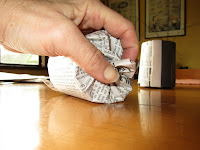
This is probably the most tricky part. You grasp the paper at the bottom
and twist it together and push it into the hole at the bottom of the pot

Like that. Now push the paper pot, with the pot maker in it
down on a surface, to seal and flatten the bottom nicely

Almost done!

Twist the wooden pot maker out of the paper
and fold the edge that sticks out on top to the inside, that is
what makes the pot sturdier and holding together better then the old.
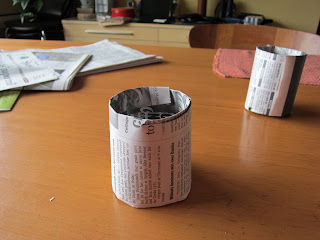 Voila! You just made yourself a paper pot
You can get the Paper pot maker here, it comes in two sizes
http://www.seedandgarden.com/shop/products/NViroPotter-Paper-Pot-Making-Tool.html
What couldn't you love on that thing? It forced you to recycle the newspaper! Back then they didn't even recycle Newspaper where we lived, nope there was no recycle pick up at our town. You could get the best soil mix you could get your hand on, or make your own instead having to rely on whatever they put into those Jiffy pots. Okay, you could do that with plastic pots also, but........no more messed up roots when you transplant, since you plant the whole pot and all. What is not to love!
For a few years I lost my way, I admit, I got lazy, I got plastic pots and filled them with dirt. I tried all the newest growing pots, growing systems trying to find the one that just might be the best growing system ever invented.
I never found it, I think it doesn't exist or maybe I just had it all along. Paper pot!
Nevertheless I think I have to retire my good old paper pot maker.
No, not what you think...no, I didn't fall of the wagon.

It is much simpler to use then the older model and makes pots about 7.5 x 7cm wide instead 5.5 x 5.5 cm as the old one that are also much more solidly built. I tweaked the instruction a bit because it was easier with less cutting involved and made for even sturdier pots.

start out with a half page of newspaper

Fold about 2/3 over lengthwise

fold a edge over about 3/4 to 1 inch on the folded edge, with the last third cut in so it is not folded over

roll the paper pot along the edge, but keep
the open edge loose

like you see in this picture

This is probably the most tricky part. You grasp the paper at the bottom
and twist it together and push it into the hole at the bottom of the pot

Like that. Now push the paper pot, with the pot maker in it
down on a surface, to seal and flatten the bottom nicely

Almost done!

Twist the wooden pot maker out of the paper
and fold the edge that sticks out on top to the inside, that is
what makes the pot sturdier and holding together better then the old.

You can get the Paper pot maker here, it comes in two sizes
http://www.seedandgarden.com/shop/products/NViroPotter-Paper-Pot-Making-Tool.html
Tuesday, March 1, 2011
Companion planting charts
I have been busy reading over the winter and finding more information about Companion plantings, Inter-planting of vegetables and flowers, and rotations in the vegetable plants.
Companion planting is based on the idea that certain plants can benefit others when planted close to each other so that some cultural benefit like pest control, disease prevention, nutrient support and higher yields, can be utilized by the plants growing together. Knowing what plants can be planted together helps to utilize your beds better, because you can plant denser, the technique comes from the Bio-intensive garden philosophy. It also helps with the succession planting, because you use the space around larger or later plants, planting quick maturing and smaller plants between them. Granted it takes much more planning to do it successfully and to make the planning easier, I came up with the idea of making a chart. Which I will tape into the lid of my seed box to have it always available when planting outside.
There is a lot of information out there in books and the internet but I found many of the charts lacking for my use. Most of them gave you some but not enough information. Some of the information I didn't need. I just don't need to know when I am outside planting, why I plant them together, just give me what I can plant together and what I need to know for the task. Many of the online charts usually just cover the basic vegetables. Many didn't even give you all the kinds of vegetables one could grow together, keeping their information very basic.
For a gardener that goes for the unique and unknown vegetables to add to the common available ones basic just doesn't cut it. I am such an information hog, I just needed more!
So I decided I would learn as much as I could about companion planting and then put what I have learned into a chart, utilizing all the information I found.

Some of the best information I found in the book I got last year
The Kitchen Garden Grower's Guide by Stephen Albert
This book is so full of the basic information to help you grow your garden and covers many more vegetables then most garden books I have come across and the best is it is all in a simple Encyclopedic format.
So here are the charts I made. They are large and I had to break it into 2 files. If you click on the picture it should pop up into a larger file. I probably will keep adding more information to the charts as I learn more about companion plantings of some of the newer vegetables I am getting. I also added some basic fertilizing and bed preparation information but didn't add the herbs and perennial vegetables into the chart, because I have my herbs in a separate herb garden area close to the vegetable garden and the perennial vegetables aren't planted in the raised garden beds in my garden.
Chart number one from Arugula to Eggplant

Chart number two from Endive to Turnips

Enjoy!
Companion planting is based on the idea that certain plants can benefit others when planted close to each other so that some cultural benefit like pest control, disease prevention, nutrient support and higher yields, can be utilized by the plants growing together. Knowing what plants can be planted together helps to utilize your beds better, because you can plant denser, the technique comes from the Bio-intensive garden philosophy. It also helps with the succession planting, because you use the space around larger or later plants, planting quick maturing and smaller plants between them. Granted it takes much more planning to do it successfully and to make the planning easier, I came up with the idea of making a chart. Which I will tape into the lid of my seed box to have it always available when planting outside.
There is a lot of information out there in books and the internet but I found many of the charts lacking for my use. Most of them gave you some but not enough information. Some of the information I didn't need. I just don't need to know when I am outside planting, why I plant them together, just give me what I can plant together and what I need to know for the task. Many of the online charts usually just cover the basic vegetables. Many didn't even give you all the kinds of vegetables one could grow together, keeping their information very basic.
For a gardener that goes for the unique and unknown vegetables to add to the common available ones basic just doesn't cut it. I am such an information hog, I just needed more!
So I decided I would learn as much as I could about companion planting and then put what I have learned into a chart, utilizing all the information I found.
Some of the best information I found in the book I got last year
The Kitchen Garden Grower's Guide by Stephen Albert
This book is so full of the basic information to help you grow your garden and covers many more vegetables then most garden books I have come across and the best is it is all in a simple Encyclopedic format.
So here are the charts I made. They are large and I had to break it into 2 files. If you click on the picture it should pop up into a larger file. I probably will keep adding more information to the charts as I learn more about companion plantings of some of the newer vegetables I am getting. I also added some basic fertilizing and bed preparation information but didn't add the herbs and perennial vegetables into the chart, because I have my herbs in a separate herb garden area close to the vegetable garden and the perennial vegetables aren't planted in the raised garden beds in my garden.
Chart number one from Arugula to Eggplant

Chart number two from Endive to Turnips

Enjoy!
Monday, February 28, 2011
Americans don't want GMO's but are not involved in food policy
The New York Times did a blog poll (see the articles below) that show 83% of US consumers don't like GMO's in their foods; 89% want to see labeling of such; about 85% would like to see stricter Regulations and nearly 75% would buy less Salmon if the GMO Salmon get's approved.
So why then are GMO in our food, are not labeled and there are no strict regulations over GMO's?
Answer: Because we let them and because the General American Public is so uninvolved in their food politics, they (Monsanto & Co) can get away with it!
If people would just concern themselves with what is happening in the food supply as much they concern themselves with the newest Oscar Movie Winners, the latest Reality Show or the Super Bowl game, we would not be in the situation we find ourselves in.
As it is, the majority of people are not even asking questions how their food is grown, who is behind the food they are eating, who grows it, who makes it, how they grow it, what they put in it?
Who is in Control of our Food supply?
And who gives money to the politicians to influence what happens to our Food?
All the average American knows, the food sits in their grocers shelf, in the vegetable bin or meat counters waiting to be purchased. And because nobody is asking the right questions, and no-one seems to be interested in getting informed about what they shove into their mouths, the News-Media hardly even reports about our food supply, about GMO's.......aside it is about glorifying the low-fat food lobby.
So no-one even ever hears anything aside it is after the fact. After decisions have been made.
Welcome to America, where the control of the food supply is wholly in the hands of a few.
These are exactly not the people we should let control our food supply, because behind them is the large food lobby of food-processors, the soy bean and corn monarchy, CAFO meat corporations (I refuse to call these farmers and ranchers) and the people that give us High Fructose Corn syrup, Transfat and GMO's.
So you want labeled food and no funky stuff in what you eat?
It is not that hard!
You need to ask questions, inform yourself, read, make some noise, tell others what you learn, rouse some feathers, ask your paper to cover these issues! Vote with your dollars and call the right people!
Refuse to eat what they "call food" and spend your dollars where it counts.
Support your local, small organic farmer, the one that let's their animals live a healthy life and doesn't feed them crap. Sure it costs more, so what?
Just eat less meat, eat what is in season - it is cheaper that way, cook at home instead buy processed food or if you have to buy short cut meals make it organic. Grow your own as much you can. If you are not much of a gardener, find a nice spot in your yard and throw some lettuce and arugula seeds out in spring and fall and watch what happens. I bet you will be eating some lettuce and then let it seed out and never replant again.
Plant some berry bushes, a few fruit trees, they are easy food to grow.
Take control of your food!
What more important is there, then what nourishes our bodies?
Here are the articles of the New York Times "Why Aren't GMO Food labeled?"
"GMO Poll Results (and more)" including the blog poll
So why then are GMO in our food, are not labeled and there are no strict regulations over GMO's?
Answer: Because we let them and because the General American Public is so uninvolved in their food politics, they (Monsanto & Co) can get away with it!
If people would just concern themselves with what is happening in the food supply as much they concern themselves with the newest Oscar Movie Winners, the latest Reality Show or the Super Bowl game, we would not be in the situation we find ourselves in.
As it is, the majority of people are not even asking questions how their food is grown, who is behind the food they are eating, who grows it, who makes it, how they grow it, what they put in it?
Who is in Control of our Food supply?
And who gives money to the politicians to influence what happens to our Food?
All the average American knows, the food sits in their grocers shelf, in the vegetable bin or meat counters waiting to be purchased. And because nobody is asking the right questions, and no-one seems to be interested in getting informed about what they shove into their mouths, the News-Media hardly even reports about our food supply, about GMO's.......aside it is about glorifying the low-fat food lobby.
So no-one even ever hears anything aside it is after the fact. After decisions have been made.
Welcome to America, where the control of the food supply is wholly in the hands of a few.
These are exactly not the people we should let control our food supply, because behind them is the large food lobby of food-processors, the soy bean and corn monarchy, CAFO meat corporations (I refuse to call these farmers and ranchers) and the people that give us High Fructose Corn syrup, Transfat and GMO's.
So you want labeled food and no funky stuff in what you eat?
It is not that hard!
You need to ask questions, inform yourself, read, make some noise, tell others what you learn, rouse some feathers, ask your paper to cover these issues! Vote with your dollars and call the right people!
Refuse to eat what they "call food" and spend your dollars where it counts.
Support your local, small organic farmer, the one that let's their animals live a healthy life and doesn't feed them crap. Sure it costs more, so what?
Just eat less meat, eat what is in season - it is cheaper that way, cook at home instead buy processed food or if you have to buy short cut meals make it organic. Grow your own as much you can. If you are not much of a gardener, find a nice spot in your yard and throw some lettuce and arugula seeds out in spring and fall and watch what happens. I bet you will be eating some lettuce and then let it seed out and never replant again.
Plant some berry bushes, a few fruit trees, they are easy food to grow.
Take control of your food!
What more important is there, then what nourishes our bodies?
Here are the articles of the New York Times "Why Aren't GMO Food labeled?"
"GMO Poll Results (and more)" including the blog poll
Friday, February 25, 2011
Path to Freedom - Lost Urban Homestead Hero status!
It came to my knowledge today February 24th 2011, that the Dervaes Family of Path to Freedom website have trademarked the names "Urban Homestead" and "Urban Homesteading" and many other terms, some of which are commonly used by gardeners and like-minded people and now are going after people using these now trademarked terms on their Blogs, Websites, Facebook pages or in company names. Several businesses and organizations with the terms "Urban Homesteading" have received legal notifications, some sites already have been shut down.They even sent a cease and desist letter to the Santa Monica "public library" for running an urban homesteading class. Are these people Nuts?!
I feel very strongly about this, these are terms that have been used for a long time, much longer then the Dervaes Family has been working their land or gardened. These terms do not belong to them any more then others. In googling the term "Urban Homestead" I quickly came across a “Urban Homestead” program for HUD in 1974, a book published in 1975 with exact title, Articles in Mother Earth News from 1976 and 1980 and many more references before that.
In fact in Europe they traditionally have done Urban homesteading for centuries. The traditional small family farm in Europe is not far out from the communities, no it is smack in the middle of town, with the larger fields around the town in close proximity. What you think most city people in the 1800 and before did?
Right, they had gardens and chickens, meat rabbits, they grew their own food, they had "Urban Homesteads"!
Most people around the World did Urban Homesteading before the Americans used this term to describe something that has been done for millenniums. It is wrong to trademark something used in common language.....like they invented it. They didn't! It is like trade-marking the word "Farming".
What kind of "Path to Freedom" is this anyway.
One where you prevent others to enjoy what you stole from all?
This is taken from their cease and desist letter:
"If your use of one of these phrases is not to specifically identify products or services from the Dervaes Institute, then it would be proper to use generic terms to replace the registered trademark you are using. For example, when discussing general homesteading or other people’s projects, they should be referred to using terms such as ‘modern homesteading,’ ‘urban sustainability projects,’ or similar descriptions."
So it is "proper" for everyone to mince words, just so nobody risks suggesting they are doing urban homesteading?????
What is so special they are doing anyway, nobody else has done before them? Do they use a special kind of gardening, they came up with? No! They say on their website they use the "Squarefoot gardening method", so to them it seems to be perfectly okay for them to use other's ideas. What is so special of using animals to fertilize your soil, the Chinese have done that for a long time.
I really want to know, what is so different what they are doing?
What this world needs most is to grow food where most of the people are....in the cities. What they are doing is undermining this effort of others by telling them to cease and desist. They are undermining a movement. Their claims 'to be getting away from corporate control of their subsistence' are laughable if they then enact those practices on ordinary people making the same attempt. They deserve all the bad publicity they get when getting caught with this sleazy behavior.
this is from their website taken from their lame excuse they posted on there
"as the popularity of Urban Homestead and Urban Homesteading increased and began to label everything from television productions to big agriculture products, we couldn't shake the warning bells in our minds. You tell us... who would you rather own the trademarks? Us or a big business corporation?"
My answer is: "No-one, not you, not me, not my neighbor, not a corporation should own these terms as trademarks."
I am very disappointed by these developments, gardeners stabbing other gardeners in the back. How pitiful! They lost all credibility and support from me and therefore I have decided to remove all references and links pointing to their site from my blog pages. And I hope you'll do the same!
Gardeners are about sharing, sharing knowledge, planting seeds in the next gardener generations. Urban Homesteading is about making the cities a more livable, more sustainable place.
This is against my core beliefs what they have done!
I feel very strongly about this, these are terms that have been used for a long time, much longer then the Dervaes Family has been working their land or gardened. These terms do not belong to them any more then others. In googling the term "Urban Homestead" I quickly came across a “Urban Homestead” program for HUD in 1974, a book published in 1975 with exact title, Articles in Mother Earth News from 1976 and 1980 and many more references before that.
In fact in Europe they traditionally have done Urban homesteading for centuries. The traditional small family farm in Europe is not far out from the communities, no it is smack in the middle of town, with the larger fields around the town in close proximity. What you think most city people in the 1800 and before did?
Right, they had gardens and chickens, meat rabbits, they grew their own food, they had "Urban Homesteads"!
Most people around the World did Urban Homesteading before the Americans used this term to describe something that has been done for millenniums. It is wrong to trademark something used in common language.....like they invented it. They didn't! It is like trade-marking the word "Farming".
What kind of "Path to Freedom" is this anyway.
One where you prevent others to enjoy what you stole from all?
This is taken from their cease and desist letter:
"If your use of one of these phrases is not to specifically identify products or services from the Dervaes Institute, then it would be proper to use generic terms to replace the registered trademark you are using. For example, when discussing general homesteading or other people’s projects, they should be referred to using terms such as ‘modern homesteading,’ ‘urban sustainability projects,’ or similar descriptions."
So it is "proper" for everyone to mince words, just so nobody risks suggesting they are doing urban homesteading?????
What is so special they are doing anyway, nobody else has done before them? Do they use a special kind of gardening, they came up with? No! They say on their website they use the "Squarefoot gardening method", so to them it seems to be perfectly okay for them to use other's ideas. What is so special of using animals to fertilize your soil, the Chinese have done that for a long time.
I really want to know, what is so different what they are doing?
What this world needs most is to grow food where most of the people are....in the cities. What they are doing is undermining this effort of others by telling them to cease and desist. They are undermining a movement. Their claims 'to be getting away from corporate control of their subsistence' are laughable if they then enact those practices on ordinary people making the same attempt. They deserve all the bad publicity they get when getting caught with this sleazy behavior.
this is from their website taken from their lame excuse they posted on there
"as the popularity of Urban Homestead and Urban Homesteading increased and began to label everything from television productions to big agriculture products, we couldn't shake the warning bells in our minds. You tell us... who would you rather own the trademarks? Us or a big business corporation?"
My answer is: "No-one, not you, not me, not my neighbor, not a corporation should own these terms as trademarks."
I am very disappointed by these developments, gardeners stabbing other gardeners in the back. How pitiful! They lost all credibility and support from me and therefore I have decided to remove all references and links pointing to their site from my blog pages. And I hope you'll do the same!
Gardeners are about sharing, sharing knowledge, planting seeds in the next gardener generations. Urban Homesteading is about making the cities a more livable, more sustainable place.
This is against my core beliefs what they have done!
Monday, February 21, 2011
Seed organizer and planner
Every year, once the seeding planning starts, I get to a point where I wished there would be a easier way to do my seed planning, when to plant certain seeds. Since I always try new seed varieties each year because I still try to find the ones that will do best in my new garden climate, I keep adding more and more packs of seeds as time goes on. Now I started even saving many of my own seeds, and anyway there are always so many neat new Heirloom varieties each year who could pass them all on.
Definitely not me.
I have tried all different ways over the years, I made paper charts, then excel planning charts, then I started trying out various garden software. They all work to a certain extend in telling you when to plant, but it always takes to much time to set it up. Another thing that that was missing was that you just can't take that computer out into the garden. Whatever paper you take out into the vegetable garden with you, soon will be smudged by dirt, wet and unreadable or gets lost including the pens you take out with you to write down your notes.
There had to a easier way and I think I came up with a better solution.


A pre-sorted seed pack box.
I actually had been thinking of a seed sorting box for quite a while, but most boxes I found where either too small for my use or had not enough compartments (I had been keeping my vegetable seeds in 3 metal boxes I got at Ikea) then I came across this box when I was looking for sewing notions. It is just perfect for sorting the seeds. It comes with 8 variable compartments and is high enough for most seed packs to fit upright inside. The box also is close-able, so the seeds are protected and keep fresh.
This is how I sorted my seeds to make my planning easier. Since I have so many seeds I actually got two boxes to make my seed sorting system easier manageable.
 This box is practically a planting calendar and seed keeper all in one. Each box is for half a growing season.
Purple is for the pre-May planting season. The Green box for the less busy season from May to October. Each compartment is for a specific planting time starting with January and is labeled as such. Since in my area in January there are only a few plants started indoor the label says "January 15th > Indoor" telling me whatever is in this compartment I can seed in pots past Jan 15th. Indoors. February is a very busy month for seeding, so it took several compartments for that month. One for Indoor early February, two compartments for Indoor after Feb. 15th., then one for Seeding outside after Feb. 15Th.
Since I also do a lot of succession planting with certain crops, like for example 'carrots' and I have a lot of different varieties I also spread the different varieties over the different planting dates. So I have carrot seed packs in many compartments from End of March until the last planting date possible for them.
Some seeds I don't have enough to spread out like that, so I also have a simple planting calendar taped to the inside of the lid and my plan is to just keep moving the seed pack forward into the compartments each time I plant making the succession of planting easy.
The lid is a perfect place to tape seeding information as vegetable companion charts, spacing charts and fertilizing info.
Now when I go plant my seed, all I need is grab my seed sorting box by the handle, there is no need to bring anything else with me into the garden. I just get the seeds from the proper compartment and plant.
How easy is that?
I don't want to proclaim, it will be a perfect system yet but at least it should lessen the planning time spend. Granted it took time to set up, with sorting all the seeds into it with the help of my Planting chart but if it all works as planned, I never have to do it again, aside add the newest seeds I get.
I'll get back to you later in the garden season how I fared with my new seed planning system.
disclaimer: Not to be shared with the Dervaes Family of Path to Freedom Website. Thank You
Definitely not me.
I have tried all different ways over the years, I made paper charts, then excel planning charts, then I started trying out various garden software. They all work to a certain extend in telling you when to plant, but it always takes to much time to set it up. Another thing that that was missing was that you just can't take that computer out into the garden. Whatever paper you take out into the vegetable garden with you, soon will be smudged by dirt, wet and unreadable or gets lost including the pens you take out with you to write down your notes.
There had to a easier way and I think I came up with a better solution.
A pre-sorted seed pack box.
I actually had been thinking of a seed sorting box for quite a while, but most boxes I found where either too small for my use or had not enough compartments (I had been keeping my vegetable seeds in 3 metal boxes I got at Ikea) then I came across this box when I was looking for sewing notions. It is just perfect for sorting the seeds. It comes with 8 variable compartments and is high enough for most seed packs to fit upright inside. The box also is close-able, so the seeds are protected and keep fresh.
This is how I sorted my seeds to make my planning easier. Since I have so many seeds I actually got two boxes to make my seed sorting system easier manageable.

Purple is for the pre-May planting season. The Green box for the less busy season from May to October. Each compartment is for a specific planting time starting with January and is labeled as such. Since in my area in January there are only a few plants started indoor the label says "January 15th > Indoor" telling me whatever is in this compartment I can seed in pots past Jan 15th. Indoors. February is a very busy month for seeding, so it took several compartments for that month. One for Indoor early February, two compartments for Indoor after Feb. 15th., then one for Seeding outside after Feb. 15Th.
Since I also do a lot of succession planting with certain crops, like for example 'carrots' and I have a lot of different varieties I also spread the different varieties over the different planting dates. So I have carrot seed packs in many compartments from End of March until the last planting date possible for them.
Some seeds I don't have enough to spread out like that, so I also have a simple planting calendar taped to the inside of the lid and my plan is to just keep moving the seed pack forward into the compartments each time I plant making the succession of planting easy.
The lid is a perfect place to tape seeding information as vegetable companion charts, spacing charts and fertilizing info.
Now when I go plant my seed, all I need is grab my seed sorting box by the handle, there is no need to bring anything else with me into the garden. I just get the seeds from the proper compartment and plant.
How easy is that?
I don't want to proclaim, it will be a perfect system yet but at least it should lessen the planning time spend. Granted it took time to set up, with sorting all the seeds into it with the help of my Planting chart but if it all works as planned, I never have to do it again, aside add the newest seeds I get.
I'll get back to you later in the garden season how I fared with my new seed planning system.
disclaimer: Not to be shared with the Dervaes Family of Path to Freedom Website. Thank You
Friday, February 18, 2011
Healthy Food Action
Healthy Food Action
Please add your name to the Charter for a Healthy Farm Bill!
For a Farm Bill that is holistic in nature and includes sections on transparency, fairness and environmental sustainability
and is good for us the consumer, the farmer and out environment.
Make your voices heard, because this administration is not going to act without us getting louder and tell them what is important to us.
Eaters must become more political. We can't just vote with our forks.
You can read the whole charter on the web page of Healthy Food Action
and while you are at it supporting a good Healthy Farm Bill
maybe you like to sign this petition also voice your support for making our food system fair for all of us
http://action.foodandwaterwatch.org/p/dia/action/public/?action_KEY=5597
Please add your name to the Charter for a Healthy Farm Bill!
For a Farm Bill that is holistic in nature and includes sections on transparency, fairness and environmental sustainability
and is good for us the consumer, the farmer and out environment.
Make your voices heard, because this administration is not going to act without us getting louder and tell them what is important to us.
Eaters must become more political. We can't just vote with our forks.
You can read the whole charter on the web page of Healthy Food Action
and while you are at it supporting a good Healthy Farm Bill
maybe you like to sign this petition also voice your support for making our food system fair for all of us
http://action.foodandwaterwatch.org/p/dia/action/public/?action_KEY=5597
Subscribe to:
Posts (Atom)